World Consumer Rights Day
March 21, 2022
Valentine’s Day Gifts for Him That Are Anything But Cheesy
February 9, 2022
There are more than 8,000 critically endangered plant and animal species in the wild. Estimates of endangered or vulnerable wildlife on the International Union for Conservation of Nature’s Red List of Threatened Species are equally alarming — over 30,000 flora and fauna species are inching closer to extinction. Celebrating World Wildlife Day this year reconnects us to nature and reminds us what is at stake.
 Known officially as U.N. World Wildlife Day, the occasion commemorates the anniversary of the opening of the Convention on International Trade in Endangered Species of Wild Fauna and Flora (or CITES) for signature as a multilateral agreement on March 3, 1973.
This year, the theme of World Wildlife Day is ‘Recovering key species for ecosystem recovery,’ signaling the importance of wild plants and animals in maintaining the vast natural environments that provide water, nourishment, and livelihoods across the planet.
In Africa in the last five decades, some keystone wildlife species have dwindled perilously, with remaining populations becoming fragmented or extinct in the wild. Other African wildlife like the mountain gorilla has steadily increased thanks to intensive conservation efforts in their forest habitats in Rwanda, Uganda, and the Democratic Republic of Congo. However, the fate of species like the northern white rhino is uncertain with the death of Sudan, the last male of the rhino subspecies in 2018. While the two surviving females remain under high-security, 24-hour surveillance in Kenya’s Ol Pejeta Conservancy, a team of scientists is trying to develop embryos from harvested eggs and sperms from the last individuals of the species historically found across East and Central Africa.
Kenya launches a new strategy to save its white rhinos.
On March 3, 2022, the Kenya Wildlife Service, with support from the Kenya government and organizations like African Wildlife Foundation, is setting in motion a new conservation management plan to recover the country’s southern white rhino populations — another reason to celebrate World Wildlife Day.
Known officially as U.N. World Wildlife Day, the occasion commemorates the anniversary of the opening of the Convention on International Trade in Endangered Species of Wild Fauna and Flora (or CITES) for signature as a multilateral agreement on March 3, 1973.
This year, the theme of World Wildlife Day is ‘Recovering key species for ecosystem recovery,’ signaling the importance of wild plants and animals in maintaining the vast natural environments that provide water, nourishment, and livelihoods across the planet.
In Africa in the last five decades, some keystone wildlife species have dwindled perilously, with remaining populations becoming fragmented or extinct in the wild. Other African wildlife like the mountain gorilla has steadily increased thanks to intensive conservation efforts in their forest habitats in Rwanda, Uganda, and the Democratic Republic of Congo. However, the fate of species like the northern white rhino is uncertain with the death of Sudan, the last male of the rhino subspecies in 2018. While the two surviving females remain under high-security, 24-hour surveillance in Kenya’s Ol Pejeta Conservancy, a team of scientists is trying to develop embryos from harvested eggs and sperms from the last individuals of the species historically found across East and Central Africa.
Kenya launches a new strategy to save its white rhinos.
On March 3, 2022, the Kenya Wildlife Service, with support from the Kenya government and organizations like African Wildlife Foundation, is setting in motion a new conservation management plan to recover the country’s southern white rhino populations — another reason to celebrate World Wildlife Day.
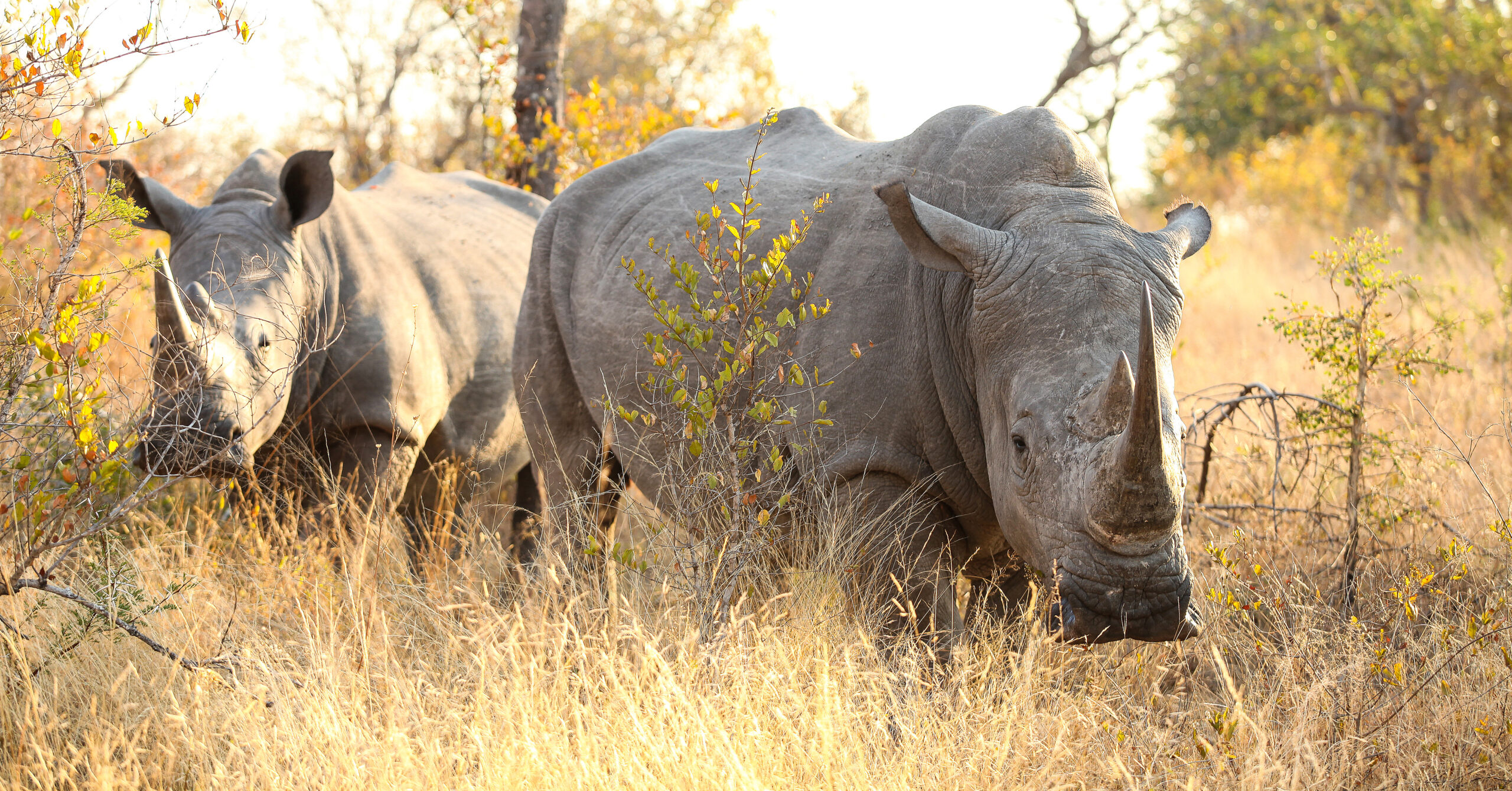 Both southern white rhinos and black rhinos are found in Kenya. According to historical data from Kenya Wildlife Service, the black rhino population in Kenya surpassed 20,000 in the 1970s, but intense pressure from poaching in the following years drastically reduced numbers to a mere 400 in 1987. Recovering this critically endangered keystone species has been a priority for Kenya, which recognizes the immense ecological value of rhinos and sees the rhino species as an emblem of the country’s spectacular offering for wildlife-based tourism. The recovery of the southern white rhino across the continent since the poaching crisis of the 1970-80s is considered a conservation success story. Although South Africa boasts the greatest population (over 18,000 now from roughly 200 in the 1990s), rhino range states like Kenya have played an important role in the southern white rhino’s comeback. Located in national protected areas as well as wildlife conservancies, southern white rhinos in Kenya are also benefiting from the country’s strong wildlife law enforcement policies.
AWF and Nature’s Best Photography open submissions for the Mkapa awards.
World Wildlife Day 2022 also marks the official call for entries to the second Benjamin Mkapa African Wildlife Photography Awards. From March 3 up to June 1, 2022, photographers of various expertise levels and ages — there is a category for young people under 18 — can submit their wildlife photography to this exciting global competition designed to share the message of wildlife conservation in Africa far and wide.
Learn more about the second annual Benjamin Mkapa African Wildlife Photography Awards
Both southern white rhinos and black rhinos are found in Kenya. According to historical data from Kenya Wildlife Service, the black rhino population in Kenya surpassed 20,000 in the 1970s, but intense pressure from poaching in the following years drastically reduced numbers to a mere 400 in 1987. Recovering this critically endangered keystone species has been a priority for Kenya, which recognizes the immense ecological value of rhinos and sees the rhino species as an emblem of the country’s spectacular offering for wildlife-based tourism. The recovery of the southern white rhino across the continent since the poaching crisis of the 1970-80s is considered a conservation success story. Although South Africa boasts the greatest population (over 18,000 now from roughly 200 in the 1990s), rhino range states like Kenya have played an important role in the southern white rhino’s comeback. Located in national protected areas as well as wildlife conservancies, southern white rhinos in Kenya are also benefiting from the country’s strong wildlife law enforcement policies.
AWF and Nature’s Best Photography open submissions for the Mkapa awards.
World Wildlife Day 2022 also marks the official call for entries to the second Benjamin Mkapa African Wildlife Photography Awards. From March 3 up to June 1, 2022, photographers of various expertise levels and ages — there is a category for young people under 18 — can submit their wildlife photography to this exciting global competition designed to share the message of wildlife conservation in Africa far and wide.
Learn more about the second annual Benjamin Mkapa African Wildlife Photography Awards
Known officially as U.N. World Wildlife Day, the occasion commemorates the anniversary of the opening of the Convention on International Trade in Endangered Species of Wild Fauna and Flora (or CITES) for signature as a multilateral agreement on March 3, 1973.
This year, the theme of World Wildlife Day is ‘Recovering key species for ecosystem recovery,’ signaling the importance of wild plants and animals in maintaining the vast natural environments that provide water, nourishment, and livelihoods across the planet.
In Africa in the last five decades, some keystone wildlife species have dwindled perilously, with remaining populations becoming fragmented or extinct in the wild. Other African wildlife like the mountain gorilla has steadily increased thanks to intensive conservation efforts in their forest habitats in Rwanda, Uganda, and the Democratic Republic of Congo. However, the fate of species like the northern white rhino is uncertain with the death of Sudan, the last male of the rhino subspecies in 2018. While the two surviving females remain under high-security, 24-hour surveillance in Kenya’s Ol Pejeta Conservancy, a team of scientists is trying to develop embryos from harvested eggs and sperms from the last individuals of the species historically found across East and Central Africa.
Kenya launches a new strategy to save its white rhinos.
On March 3, 2022, the Kenya Wildlife Service, with support from the Kenya government and organizations like African Wildlife Foundation, is setting in motion a new conservation management plan to recover the country’s southern white rhino populations — another reason to celebrate World Wildlife Day.
Both southern white rhinos and black rhinos are found in Kenya. According to historical data from Kenya Wildlife Service, the black rhino population in Kenya surpassed 20,000 in the 1970s, but intense pressure from poaching in the following years drastically reduced numbers to a mere 400 in 1987. Recovering this critically endangered keystone species has been a priority for Kenya, which recognizes the immense ecological value of rhinos and sees the rhino species as an emblem of the country’s spectacular offering for wildlife-based tourism. The recovery of the southern white rhino across the continent since the poaching crisis of the 1970-80s is considered a conservation success story. Although South Africa boasts the greatest population (over 18,000 now from roughly 200 in the 1990s), rhino range states like Kenya have played an important role in the southern white rhino’s comeback. Located in national protected areas as well as wildlife conservancies, southern white rhinos in Kenya are also benefiting from the country’s strong wildlife law enforcement policies.
AWF and Nature’s Best Photography open submissions for the Mkapa awards.
World Wildlife Day 2022 also marks the official call for entries to the second Benjamin Mkapa African Wildlife Photography Awards. From March 3 up to June 1, 2022, photographers of various expertise levels and ages — there is a category for young people under 18 — can submit their wildlife photography to this exciting global competition designed to share the message of wildlife conservation in Africa far and wide.
Learn more about the second annual Benjamin Mkapa African Wildlife Photography Awards
Related posts

January 8, 2023